






Welcome To Shawpak Systems Ltd
Established in 1984 Shawpak Systems prides itself on providing high level technical sales and support to our valued customer base. Offering solutions for Product Inspection, Packaging and Hygiene equipment sales and after sales support including certified customer training on site or at our Centre of Excellence training and demonstration facility.
What Our Clients Are Saying
North American Distributor Hygiene Equipment Solutions
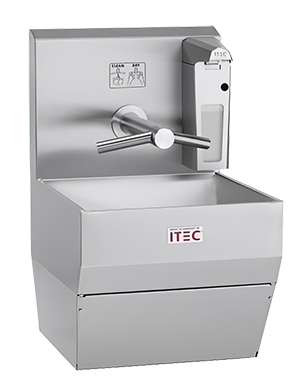
Shawpak are the exclusive distributor in North America for Hygiene Solutions with complete parts and service support.
Product Safety
Our experience in the product inspection industry is essential to the success of our quality assurance program, because we can enhance the safety of your products by detecting contaminants, for the removal, before those products reach your consumers.
Protection and Trust
Protecting your customers, shareholders and brand is your ultimate goal. Ensuring that you have the proper equipment to do the job is ours.
Technical Advisors
Shawpak Systems Technical Advisors will guide you through the best practice options available based on your specific application, acting as your Trusted Advisor.

Crate Cleaning
Crate Cleaning is the process of removing food residue, pathogens, and contaminants from reusable transport and storage containers used in food processing, meat handling, and pharmaceutical manufacturing. Shawpak Systems Ltd serves industrial facilities across North America-from Oakville and throughout Ontario to operations across Canada and the USA-with purpose-built equipment and advisory expertise to keep your crate sanitation efficient and compliant.
Reusable plastic and composite crates are workhorses in food and manufacturing environments, but they accumulate biofilm, bacterial colonies, and chemical residues that hand-washing cannot reliably remove. The difference between manual and automated approaches directly affects your production timeline, labour costs, water consumption, and most critically, food safety outcomes. Selecting the right method requires understanding your facility's throughput, the contamination profile you face, and your regulatory obligations.
Manual Versus Automated Approaches to Container Sanitation
Manual hand-washing with high-pressure spray nozzles and detergent is labour-intensive and inconsistent. Workers cannot reliably reach interior surfaces, corners, and stacked geometry. Drying times extend production cycles, and workers face repetitive strain and chemical exposure. Automated tunnel systems, by contrast, deliver spray patterns calibrated to remove soils at precise temperatures and pressures while running on predetermined cycles that ensure repeatability.
Because automated systems enforce standardized wash protocols, you achieve documented sanitation outcomes that satisfy audit requirements and reduce cross-contamination risk. The systems Shawpak Systems supplies operate on heated water circulation, chemical injection at controlled concentrations, and final rinse stages that leave containers food-safe and dry-ready within minutes. This speed multiplies throughput: a facility processing 500 crates per shift can recover 15-20 percent of its cycle time by eliminating manual drying steps.
| Approach | Labour Cost | Consistency | Cycle Time | Water Use |
|---|---|---|---|---|
| Manual spray washing | High (staff-hours per batch) | Variable (operator-dependent) | 20-40 minutes per load | High (excess runoff) |
| Automated tunnel system | Low (operator monitors only) | Consistent (programmed cycles) | 8-12 minutes per load | Optimized (recirculation reduces waste) |
| Hybrid (manual + spot automation) | Moderate | Good (staged quality) | 12-18 minutes per load | Moderate |
Meat processing operations, pharmaceutical manufacturers, and high-volume food processors typically favour full automation because compliance documentation, speed, and worker safety justify the capital outlay. Smaller facilities or those with seasonal demand may combine manual pre-rinse stations with partial automation or outsourced deep-cleaning services.
Equipment Selection and Integration at Your Facility
Shawpak Systems provides technical advisory support to help you match equipment specifications to your actual soiling challenge, crate geometry, and production volume. The decision hinges on several factors:
- Soil type and severity: Protein residue, fats, and soil require higher water temperature (typically 60-80 degrees Celsius) and longer spray exposure than low-contamination wash-down scenarios. Meat processing crates demand more aggressive cleaning than dry-goods containers.
- Throughput requirement: If your facility processes 1,000+ crates daily, an automated system pays for itself within 2-3 years through labour savings alone. Below 300 crates per day, manual or hybrid methods may be cost-effective.
- Space and utilities: Tunnel systems require dedicated floor space, drainage infrastructure, and hot-water capacity. Existing facility layouts in Oakville and across Ontario sometimes constrain equipment footprint; Shawpak's team assesses your site constraints during consultation.
- Water and chemical management: Automated systems recirculate water and detergent, reducing consumption by 30-50 percent compared to continuous manual spraying. In water-stressed regions, this efficiency adds environmental and cost value.
- Regulatory and audit requirements: FDA, CFIA, and internal quality standards increasingly demand documented sanitation logs. Automated systems generate timestamped cycle records; manual processes rely on observer notes and visual inspection-a weaker audit trail.
Shawpak Systems' Centre of Excellence demonstration facility allows you to observe equipment operating under conditions matching your own production. On-site training ensures your operators understand cycle parameters, maintenance protocols, and troubleshooting-reducing downtime and extending equipment life.
If you operate a food processing plant, manufacturing facility, or pharmaceutical operation and need to evaluate or upgrade your container sanitation approach, Shawpak Systems Ltd is ready to discuss your specific challenge. Reach out to explore how our equipment, technical guidance, and after-sales support can strengthen your hygiene compliance and production efficiency.
Frequently Asked Questions
What is the fastest method for cleaning reusable crates in a food processing facility?
Automated tunnel washing systems complete a full sanitation cycle in 8-12 minutes per load, compared to 20-40 minutes for manual hand-washing. Speed increases further when crates exit dry and ready for immediate reuse, eliminating separate drying stages that extend manual cycle times.
How does automated crate cleaning reduce food safety risk compared to manual washing?
Automated systems enforce standardized spray patterns, water temperature, detergent concentration, and contact time, removing the variability of human operators and ensuring that all interior surfaces, corners, and crevices receive consistent treatment. This repeatability reduces the risk of biofilm survival and cross-contamination.
Is there crate cleaning equipment available near Oakville, Ontario?
Shawpak Systems Ltd is based in Oakville and serves facilities throughout Ontario and North America. The company supplies, installs, and supports automated and manual crate sanitation equipment, and maintains a Centre of Excellence demonstration facility where you can evaluate equipment in operation.
How much water does an automated crate washing system use compared to manual spraying?
Automated systems recirculate water and reduce consumption by 30-50 percent because detergent concentration and spray duration are optimized for each soil type, whereas manual spraying often involves continuous runoff and excess chemical waste. This efficiency reduces both water costs and environmental impact.
What type of facility benefits most from automated rather than manual crate cleaning?
Facilities processing 1,000 or more crates daily typically see return on capital investment within 2-3 years through labour savings, faster throughput, and reduced water costs. Meat processing, pharmaceutical, and high-volume food operations are strong candidates, while smaller producers may use hybrid or manual approaches cost-effectively.

Products to Suit Your Needs
- Hygiene Equipment
- Product Inspection
- Packaging Equipment
- Training and Demo Facility
- Sealing Equipment
- Custom Conveyors
- Consultant Service
- Direct Drive Technology
- Spare Parts
- Test Samples
Contact US
For general information or to set up an appointment please complete the form below or give us a call.
GENERAL INQUIRIES
Sales (905) 847 0122 EXT 1
Accounting (905) 847 0122 EXT 4