






Welcome To Shawpak Systems Ltd
Established in 1984 Shawpak Systems prides itself on providing high level technical sales and support to our valued customer base. Offering solutions for Product Inspection, Packaging and Hygiene equipment sales and after sales support including certified customer training on site or at our Centre of Excellence training and demonstration facility.
What Our Clients Are Saying
North American Distributor Hygiene Equipment Solutions
Shawpak are the exclusive distributor in North America for Hygiene Solutions with complete parts and service support.
Product Safety
Our experience in the product inspection industry is essential to the success of our quality assurance program, because we can enhance the safety of your products by detecting contaminants, for the removal, before those products reach your consumers.
Protection and Trust
Protecting your customers, shareholders and brand is your ultimate goal. Ensuring that you have the proper equipment to do the job is ours.
Technical Advisors
Shawpak Systems Technical Advisors will guide you through the best practice options available based on your specific application, acting as your Trusted Advisor.


Knife Cleaning Food
Knife cleaning in food processing refers to the systematic removal of food residue, pathogens, and contaminants from cutting implements used in production environments. Shawpak Systems Ltd supplies and installs industrial hygiene equipment across North America, including dedicated knife sanitization and cleaning systems designed for food processing facilities, meat processing operations, and manufacturing plants operating in Oakville and throughout the region.
The choice of how to clean knives in high-volume food production environments directly affects worker safety, product contamination risk, and operational efficiency. Facilities face a decision between manual washing protocols, centralized industrial cleaning stations, and automated ultrasonic systems. Each approach carries distinct trade-offs in cost, labor intensity, hygiene assurance, and scalability. Understanding these differences enables plant managers and operations directors to select the method that aligns with facility size, production volume, and regulatory requirements.
Manual Washing vs. Automated Cleaning Systems
Manual knife washing remains common in smaller operations but introduces variability in hygiene outcomes. Workers wash blades under running water, apply detergent, rinse, and sanitize by hand-a process that depends entirely on individual technique and attention. Because human consistency varies, contamination risks persist even in well-intentioned facilities.
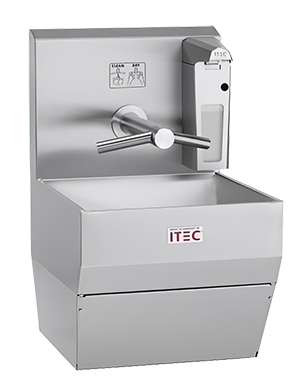
Automated industrial cleaning systems eliminate this variability. Shawpak Systems provides hygiene equipment that standardizes the cleaning process: knives are placed into a centralized station, exposed to high-pressure water jets, chemical sanitizers, and drying cycles on a fixed schedule. Every blade receives identical treatment regardless of operator. Facilities using industrial boot cleaners and hand sanitization systems through Shawpak often integrate dedicated knife cleaning equipment into the same hygiene workflow, reducing overall contamination pathways.
Key differences between approaches:
- Manual washing requires ongoing staff training and supervision to maintain standards
- Automated systems deliver consistent results and reduce reliance on individual worker performance
- Manual methods scale poorly as production volume increases-more knives mean more time
- Industrial systems handle high-volume knife turnover without additional labor cost per unit
- Automated equipment provides documentation and traceability for compliance audits
Ultrasonic Technology and Industrial Sanitization Stations
Ultrasonic knife cleaning uses high-frequency sound waves to agitate cleaning solution, dislodging microscopic food particles and bacteria from blade surfaces and crevices. This method proves particularly effective for serrated knives or blades with complex geometry where manual scrubbing often leaves residue behind.
Because ultrasonic systems operate at frequencies between 20 and 40 kHz, they reach areas that brush bristles and water pressure cannot. A blade immersed in an ultrasonic bath for 5 to 10 minutes achieves cleanliness levels difficult to match through any manual process. When combined with hot water and approved food-grade sanitizing chemicals, ultrasonic stations deliver hygiene assurance suitable for the strictest regulatory environments.
Industrial sanitization stations offered by Shawpak Systems integrate multiple cleaning methods. A typical station combines:
- High-pressure rinse cycles to remove bulk food residue
- Ultrasonic or immersion stages for deep contamination removal
- Chemical sanitizer application at controlled concentrations
- Hot air drying to prevent bacterial regrowth
- Storage racks positioned for ergonomic knife retrieval by workers
Facilities in Oakville and across North America that implement centralized knife cleaning stations report fewer product recalls linked to foreign material contamination and reduced worker exposure to sharp, contaminated implements during manual washing procedures.
Comparison: Cost, Labor, and Hygiene Trade-offs
| Method | Initial Investment | Labor Per Shift | Hygiene Consistency | Scalability |
|---|---|---|---|---|
| Manual Washing | Minimal (sink, soap, towels) | High (ongoing staff time) | Variable (operator-dependent) | Poor (time increases with volume) |
| Industrial Cleaning Station | Moderate ($5,000-$15,000 range) | Low (load and unload) | High (standardized cycles) | Excellent (handles hundreds daily) |
| Ultrasonic System with Sanitization | Higher ($15,000-$30,000+ range) | Low (minimal operator intervention) | Very High (reaches microscopic contaminants) | Excellent (fully automated operation) |
The investment in industrial cleaning equipment typically recovers within 18 to 24 months through labor savings, reduced waste from contamination recalls, and decreased worker injury risk. Pharmaceutical companies and meat processing operations-where contamination consequences are most severe-consistently choose automated systems despite higher upfront cost.
Why Shawpak Systems Supports Oakville Facilities with Hygiene Solutions
Selecting appropriate knife cleaning equipment requires understanding both your production volume and your regulatory environment. Shawpak Systems Ltd has served manufacturing and food processing facilities across North America since 1984, offering technical advisory consultation to help operations directors and plant managers choose the right approach. The company operates a Centre of Excellence demonstration facility where you can evaluate different hygiene equipment in action before committing to purchase.
Beyond equipment supply, Shawpak provides on-site training so your team operates cleaning systems at full effectiveness and certified after-sales support across Canada and the USA. Because the company is the exclusive North American distributor for Hygiene Solutions, you access both leading product lines and the technical expertise to integrate knife cleaning into your broader facility hygiene strategy-whether that includes industrial boot cleaners, hand sanitization systems, or shrink wrapping equipment.
If your facility is evaluating how to improve knife cleaning protocols and reduce contamination risk, reach out to discuss your operation's specific needs. Shawpak Systems works with you to assess production volume, facility layout, and compliance requirements, then recommends the solution that delivers measurable results.
Frequently Asked Questions
What is the difference between manual and automated knife cleaning in food processing?
Manual washing depends on individual worker technique and attention, creating variable hygiene outcomes and increased contamination risk. Automated systems standardize the cleaning process, ensuring every blade receives identical treatment-high-pressure rinse, sanitizer application, and drying-regardless of operator. Automated systems also scale efficiently as production volume increases, whereas manual methods require proportionally more labor.
How do ultrasonic knife cleaning systems work?
Ultrasonic systems use high-frequency sound waves (20-40 kHz) to agitate cleaning solution, dislodging microscopic food particles and bacteria from blade surfaces and crevices. A blade immersed in an ultrasonic bath for 5 to 10 minutes achieves cleanliness levels difficult to match through manual scrubbing, particularly for serrated knives or blades with complex geometry. When combined with hot water and food-grade sanitizing chemicals, ultrasonic stations deliver the hygiene assurance required by strict regulatory standards.
What is the typical cost of an industrial knife cleaning station?
Industrial cleaning stations range from approximately $5,000 to $30,000 depending on capacity, automation level, and integrated features such as ultrasonic capability and hot air drying. Higher-end systems with full automation typically recover their investment within 18 to 24 months through labor savings, reduced contamination recalls, and decreased worker injury risk. Shawpak Systems can assess your facility's volume and budget to recommend an option that fits your needs.
Are there industrial knife cleaning solutions available in Oakville?
Yes. Shawpak Systems Ltd, based in Oakville, Ontario, supplies and installs industrial knife cleaning and hygiene equipment for food processing facilities, manufacturing plants, and pharmaceutical companies across North America. The company offers technical consultation, on-site training, and certified after-sales support to ensure your equipment operates at full effectiveness. Visit their Centre of Excellence demonstration facility to evaluate solutions firsthand.
How does knife cleaning fit into a broader facility hygiene strategy?
Knife cleaning is one component of a comprehensive contamination prevention approach. Facilities typically integrate knife sanitization with other hygiene equipment such as industrial boot cleaners and hand sanitization systems to reduce cross-contamination pathways across the entire operation. Shawpak Systems helps operations directors design integrated hygiene workflows that address all entry points where pathogens and foreign material can compromise product safety.

Products to Suit Your Needs
- Hygiene Equipment
- Product Inspection
- Packaging Equipment
- Training and Demo Facility
- Sealing Equipment
- Custom Conveyors
- Consultant Service
- Direct Drive Technology
- Spare Parts
- Test Samples
Contact US
For general information or to set up an appointment please complete the form below or give us a call.
GENERAL INQUIRIES
Sales (905) 847 0122 EXT 1
Accounting (905) 847 0122 EXT 4