






Welcome To Shawpak Systems Ltd
Established in 1984 Shawpak Systems prides itself on providing high level technical sales and support to our valued customer base. Offering solutions for Product Inspection, Packaging and Hygiene equipment sales and after sales support including certified customer training on site or at our Centre of Excellence training and demonstration facility.
What Our Clients Are Saying
North American Distributor Hygiene Equipment Solutions
Shawpak are the exclusive distributor in North America for Hygiene Solutions with complete parts and service support.
Product Safety
Our experience in the product inspection industry is essential to the success of our quality assurance program, because we can enhance the safety of your products by detecting contaminants, for the removal, before those products reach your consumers.
Protection and Trust
Protecting your customers, shareholders and brand is your ultimate goal. Ensuring that you have the proper equipment to do the job is ours.
Technical Advisors
Shawpak Systems Technical Advisors will guide you through the best practice options available based on your specific application, acting as your Trusted Advisor.

Knife Disinfection
Knife disinfection is the process of eliminating pathogens and contamination from cutting blades used in food processing, meat handling, and pharmaceutical manufacturing, protecting both product integrity and worker safety. Shawpak Systems Ltd has spent four decades helping industrial facilities across North America solve this exact challenge, and the approach you choose matters far more than most operations realize.
If you manage a food processing facility, meat processing operation, or pharmaceutical manufacturing plant in Oakville or across Canada and the USA, you know that cross-contamination from cutting equipment is a genuine risk. Knives move constantly between tasks, between stations, and between workers. A blade that touches raw poultry at 9 a.m. cannot safely touch prepared product at 9:15 a.m. without proper intervention. The question is not whether you need to address this-regulatory compliance and good manufacturing practice demand it. The question is how, and at what cost to your production flow.
Shawpak Systems Ltd works with plant managers and operations directors to evaluate three fundamental approaches: manual cleaning and sanitizing protocols, semi-automated wash stations, and fully integrated disinfection systems built into your production line. Each has real strengths and real limitations. Understanding them helps you make a choice that actually fits your facility, not one that looked good on paper.
Manual Protocols Versus Automated Disinfection Systems
Manual knife sanitization relies on staff discipline, hot water, approved sanitizing agents, and dedicated time. Workers dip blades into sanitizing solution, air-dry or wipe them, and return to work. This method costs little upfront and requires no capital equipment investment. Because it is simple, it can work well in very small operations or as a backup protocol.
The problem emerges quickly in any mid-sized or larger facility. Manual protocols depend entirely on human consistency. Staff fatigue, pressure to maintain speed, and shift changes create gaps. Studies of food processing environments show that manual sanitization is skipped or rushed approximately 20-30% of the time under production pressure. Auditors notice this. Customers notice this. One contamination incident costs far more than any equipment investment.
Automated disinfection systems remove the human variable. Blades are placed into a chamber or pass-through system; the equipment applies heat, chemical sanitizer, or ultraviolet light; and the blade emerges disinfected on a documented cycle. Because the process is mechanical and timestamped, compliance is verifiable. Because it happens the same way every time, the risk of gaps drops dramatically.
Shawpak Systems Ltd supplies industrial-grade sanitization equipment designed specifically for the rhythm of production. These are not consumer-grade devices. They are built to handle dozens of blades per hour, to integrate into existing conveyor and workflow systems, and to log every cycle for traceability.
Comparing Sanitization Methods: Chemical, Heat, and Ultraviolet Approaches
Three main technologies exist for automated blade disinfection, and each solves the problem differently. Understanding their trade-offs helps your facility in Oakville or elsewhere choose equipment that matches your production type, your regulatory environment, and your operational constraints.
| Method | Process | Cycle Time | Best For | Key Limitation |
|---|---|---|---|---|
| Chemical Immersion | Blade submerged in approved sanitizer (quaternary ammonium or chlorine solution) | 30-60 seconds | High-volume cutting; cost-effective; proven efficacy | Requires chemical replenishment; slight blade corrosion over time; operator exposure to fumes |
| Hot Water / Steam | Blade exposed to 180-200 degree Fahrenheit water or steam for sanitization | 15-30 seconds | Facilities avoiding chemicals; stainless steel blades; regulatory preference for chemical-free | Higher energy cost; potential for thermal damage to blade handles; requires regular descaling |
| Ultraviolet Light | Blade exposed to UV-C wavelength that disrupts microbial DNA | 10-20 seconds | Pharmaceutical environments; facilities with chemical sensitivity; fast throughput | Does not physically remove soil; blade must be pre-cleaned; higher equipment cost |
None of these is universally superior. A meat processing facility with high-speed cutting may favor chemical immersion because it is fast and cost-effective. A pharmaceutical operation may choose ultraviolet light to avoid any chemical residue on the blade surface. A facility balancing cost and regulatory preference might select hot water systems. Shawpak Systems Ltd helps you evaluate your specific constraints-your production speed, your regulatory requirements, your staff training capacity, and your budget-to match the right technology to your operation.
In practice, many larger facilities use a layered approach. Staff perform a quick manual wipe or pre-rinse to remove gross soil, then the blade enters an automated system for standardized disinfection. This combination removes the burden of relying on human precision for the actual sanitization step, while keeping manual cleaning quick and straightforward.
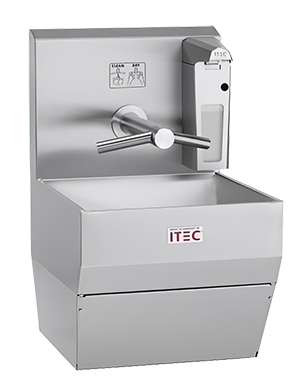
Shawpak Systems Ltd also supplies complementary equipment that amplifies the effectiveness of any approach. Commercial stainless steel sinks support pre-cleaning workflows. Boot cleaning equipment and industrial boot cleaner systems ensure that contamination does not arrive at the cutting station from the floor. Integrated hygiene solutions create an environment where disinfection actually sticks, because the upstream steps are controlled too.
Your choice of method shapes your compliance documentation, your training program, your chemical or energy budget, and your maintenance schedule. It also shapes your confidence that the system will actually work when an auditor is watching, or when a customer asks for proof that your process is sound.
Shawpak Systems Ltd has installed and supported disinfection systems across North America for operations of every scale. Whether you are in Oakville, across Ontario, or anywhere in Canada or the USA, the approach is the same: we listen to your production challenge, we show you what works in comparable facilities, we help you understand the real operating cost of each option, and we stay with you after installation to train your team and maintain the equipment. If you are ready to move beyond hoping your manual protocols work and toward a system you can verify and defend, we are ready to talk through your specific situation.
Frequently Asked Questions
What is the fastest disinfection method for high-speed cutting operations?
Ultraviolet light systems offer the fastest cycle times at 10-20 seconds per blade, followed closely by hot water at 15-30 seconds. Chemical immersion typically requires 30-60 seconds. The right choice depends on your production speed, whether soil pre-cleaning is needed, and your facility's regulatory or quality preferences. Shawpak Systems Ltd can assess your throughput to recommend the optimal balance.
How often does blade disinfection equipment need maintenance in Oakville facilities?
Maintenance schedules vary by technology. Chemical systems need solution replenishment every 1-2 weeks depending on volume; hot water systems require descaling every 2-4 weeks; ultraviolet systems need lamp replacement annually. Shawpak Systems Ltd includes a maintenance and parts distribution program with every installation, ensuring your equipment stays reliable and compliant.
Can manual sanitization protocols pass a food safety audit instead of automated equipment?
Manual sanitization can meet basic standards if documented and performed consistently, but auditors increasingly prefer automated systems because they eliminate human variability and create a verifiable record of every disinfection cycle. If your facility is in Oakville or serves major retail or food service clients, automated equipment demonstrates best practice and reduces audit risk significantly.
Do I need to pre-clean blades before they enter an automated disinfection system?
Most systems benefit from pre-cleaning to remove visible soil and blood. Ultraviolet systems require it because light cannot penetrate organic matter. Chemical and hot water systems can work with some soil present, but pre-cleaning improves efficacy and extends equipment life. Shawpak Systems Ltd typically recommends a quick manual rinse or wipe as part of the overall workflow.

Products to Suit Your Needs
- Hygiene Equipment
- Product Inspection
- Packaging Equipment
- Training and Demo Facility
- Sealing Equipment
- Custom Conveyors
- Consultant Service
- Direct Drive Technology
- Spare Parts
- Test Samples
Contact US
For general information or to set up an appointment please complete the form below or give us a call.
GENERAL INQUIRIES
Sales (905) 847 0122 EXT 1
Accounting (905) 847 0122 EXT 4