






Welcome To Shawpak Systems Ltd
Established in 1984 Shawpak Systems prides itself on providing high level technical sales and support to our valued customer base. Offering solutions for Product Inspection, Packaging and Hygiene equipment sales and after sales support including certified customer training on site or at our Centre of Excellence training and demonstration facility.
What Our Clients Are Saying
North American Distributor Hygiene Equipment Solutions
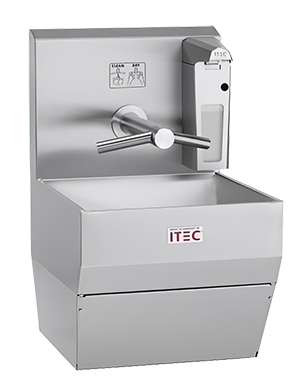
Shawpak are the exclusive distributor in North America for Hygiene Solutions with complete parts and service support.
Product Safety
Our experience in the product inspection industry is essential to the success of our quality assurance program, because we can enhance the safety of your products by detecting contaminants, for the removal, before those products reach your consumers.
Protection and Trust
Protecting your customers, shareholders and brand is your ultimate goal. Ensuring that you have the proper equipment to do the job is ours.
Technical Advisors
Shawpak Systems Technical Advisors will guide you through the best practice options available based on your specific application, acting as your Trusted Advisor.


Liquid X Ray
Liquid X Ray technology is a non-destructive inspection method that uses liquid-based radiographic contrast agents to detect contaminants, structural defects, and foreign materials within packaged products and manufacturing components without opening or damaging them. Shawpak Systems Ltd, based in Oakville, Ontario, evaluates and recommends inspection equipment for food processing, pharmaceutical, and manufacturing facilities across North America seeking contamination prevention and compliance assurance.
What Liquid X Ray Technology Actually Does
This inspection method injects or applies liquid contrast media to target materials, then uses radiographic imaging to visualize internal structures and identify anomalies. The contrast liquid adheres to or fills voids, making foreign objects, cracks, and structural inconsistencies visible on radiographic film or digital sensors. Because the process is non-destructive, products remain usable after inspection, making it suitable for high-value components and finished goods.
The technique differs from dry radiography in several ways. Liquid contrast enhances edge definition and penetrates irregular surfaces more effectively than air gaps alone. For food processing operations, this means detecting glass fragments, metal shards, or bone fragments within packaged meat or prepared products. For manufacturing, it reveals internal voids in castings, welds, or composite materials that could compromise structural integrity.
At Shawpak Systems Ltd, our technical advisory team helps operations directors and plant managers determine whether this inspection method addresses your specific contamination or quality control challenges. We evaluate your production volume, product density, regulatory requirements, and cost constraints before recommending equipment.
Comparing Liquid X Ray to Alternative Inspection Methods
Several approaches compete for contamination and defect detection in industrial settings. The choice depends on production speed, product type, detection sensitivity, and operational complexity.
| Method | Detection Capability | Speed | Product Damage Risk | Best For |
|---|---|---|---|---|
| Liquid X Ray Inspection | High sensitivity to internal defects and dense contaminants | Moderate (seconds per item) | None (non-destructive) | High-value products, complex geometries, regulatory compliance |
| Metal Detection | Ferrous and non-ferrous metals only | Fast (milliseconds) | None | Production line integration, high-speed sorting |
| X-Ray Fluoroscopy (Dry) | Good for dense materials; limited surface resolution | Moderate | None | Uniform products, bulk inspection |
| Visual Inspection + Manual Sorting | Operator-dependent; low for internal defects | Slow | Potential damage during handling | Low-volume specialty products only |
Metal detectors excel at speed and integration into continuous production lines, but they cannot detect non-metallic contaminants such as glass, ceramic, or bone. Liquid X Ray inspection detects both metallic and non-metallic foreign matter, making it the more comprehensive choice for facilities where contamination risk spans multiple material types.
Food processing facilities in Oakville and across North America increasingly face dual contamination risks: metal fragments from machinery wear and non-metallic contaminants from product sourcing or handling. A single metal detector leaves glass and ceramic undetected. Many operations now use metal detection as a front-line speed filter, then employ radiographic inspection on a sample basis or on high-risk product runs to meet stricter food safety standards.
Selecting the Right Inspection Strategy for Your Operation
The decision to implement Liquid X Ray inspection involves five key factors. First, identify what contaminants pose the greatest risk to your products and brand reputation. Second, calculate the cost per unit of inspection time against your product value and production throughput. Third, determine whether your regulatory environment (FDA, CFIA, FSMA, or industry-specific standards) mandates specific inspection methods for your product category. Fourth, assess the space and infrastructure requirements for radiographic equipment in your facility. Fifth, consider whether you need mobile inspection capability for on-site validation or centralized inspection at a dedicated facility.
Shawpak Systems Ltd provides on-site technical consultation to evaluate your operation against these criteria. Our team visits your facility, observes your production workflow, reviews your product specifications and historical contamination or quality issues, and recommends the most cost-effective inspection approach. For some operations, that recommendation is Liquid X Ray. For others, it is a combination method or a different technology entirely.
Plant managers and operations directors working with us benefit from our Centre of Excellence demonstration facility, where equipment can be tested on your actual products before purchase. This eliminates guesswork and ensures the inspection method you select performs reliably at your production scale and speed.
If you are evaluating contamination detection or quality control options for your manufacturing or food processing operation, Shawpak Systems Ltd is ready to discuss your specific needs. Contact our technical team to arrange a facility consultation or demonstration.
Frequently Asked Questions
What contaminants can Liquid X Ray detect that metal detectors cannot?
Liquid X Ray detects non-metallic foreign materials including glass, ceramic, bone fragments, hard plastic, and stone. Metal detectors identify ferrous and non-ferrous metals but cannot visualize non-conductive contaminants. For food processing operations, this distinction is critical because contamination sources span both categories. Many facilities use metal detection for speed, then employ radiographic inspection on high-risk products or as a sampling protocol to address gaps.
How fast is Liquid X Ray inspection compared to metal detection?
Metal detection operates in milliseconds per product, making it suitable for continuous high-speed production lines. Liquid X Ray inspection typically requires 3-15 seconds per item depending on product size, geometry, and image processing. This speed difference means radiographic inspection is better suited to moderate-volume or batch-processed products rather than real-time inline sorting of thousands of units per hour.
Is there a Liquid X Ray inspection service available in Oakville?
Shawpak Systems Ltd, based in Oakville, Ontario, evaluates and supplies inspection equipment including radiographic systems and advises on their implementation. We do not operate an inspection service bureau, but we help manufacturing and food processing facilities across North America select, install, and train operators on radiographic equipment for their own operations. We also provide after-sales support and parts distribution.
What is the cost difference between Liquid X Ray and other inspection methods?
Equipment costs, operating expenses, and cost-per-unit inspected vary significantly based on production volume, product type, and facility infrastructure. Metal detectors have lower upfront costs but cannot detect non-metallic contaminants. Radiographic systems require higher capital investment and trained operators but provide comprehensive detection. Shawpak Systems Ltd provides site-specific cost analysis during technical consultation so you can compare total cost of ownership, not just purchase price.

Products to Suit Your Needs
- Hygiene Equipment
- Product Inspection
- Packaging Equipment
- Training and Demo Facility
- Sealing Equipment
- Custom Conveyors
- Consultant Service
- Direct Drive Technology
- Spare Parts
- Test Samples
Contact US
For general information or to set up an appointment please complete the form below or give us a call.
GENERAL INQUIRIES
Sales (905) 847 0122 EXT 1
Accounting (905) 847 0122 EXT 4