






Welcome To Shawpak Systems Ltd
Established in 1984 Shawpak Systems prides itself on providing high level technical sales and support to our valued customer base. Offering solutions for Product Inspection, Packaging and Hygiene equipment sales and after sales support including certified customer training on site or at our Centre of Excellence training and demonstration facility.
What Our Clients Are Saying
North American Distributor Hygiene Equipment Solutions
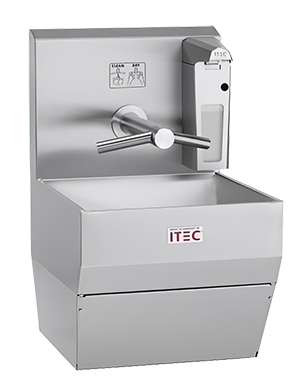
Shawpak are the exclusive distributor in North America for Hygiene Solutions with complete parts and service support.
Product Safety
Our experience in the product inspection industry is essential to the success of our quality assurance program, because we can enhance the safety of your products by detecting contaminants, for the removal, before those products reach your consumers.
Protection and Trust
Protecting your customers, shareholders and brand is your ultimate goal. Ensuring that you have the proper equipment to do the job is ours.
Technical Advisors
Shawpak Systems Technical Advisors will guide you through the best practice options available based on your specific application, acting as your Trusted Advisor.


Quality Control X Ray
X-ray inspection technology detects foreign contaminants, structural defects, and packaging integrity issues in manufactured products without opening or damaging them. Shawpak Systems Ltd supplies and supports these critical systems for food processing, pharmaceutical manufacturing, and industrial facilities across North America, helping operations in Oakville, throughout Ontario, and across the continent maintain safety standards and protect brand reputation.
When contamination events occur-metal fragments in food products, broken glass in packaging, or incomplete seals in pharmaceutical containers-the financial and reputational consequences are severe. Regulatory bodies expect documented inspection protocols. Shawpak Systems Ltd partners with facilities to evaluate inspection needs, select appropriate equipment, provide technical training, and maintain systems to ensure consistent performance.
Comparing Inspection Methods: When to Use X-Ray Technology
Three primary inspection approaches exist in modern manufacturing: visual inspection by personnel, metal detection, and x-ray imaging. Each serves different purposes and constraints.
| Method | Detection Capability | Product Limitations | Cost Range | Best For |
|---|---|---|---|---|
| Visual Inspection | Surface defects, obvious foreign objects | Works on all products | Low (labor) | Low-speed lines, secondary verification |
| Metal Detection | Ferrous and non-ferrous metals only | Cannot inspect metallic products | Moderate | Fast-moving lines requiring metal-only screening |
| X-Ray Imaging | Metal, glass, stone, density variations, foreign objects, structural defects | Minimal; works through most packaging | Higher upfront cost | High-value products, dense materials, comprehensive contamination prevention |
X-ray inspection excels where metal detectors fall short. Because x-ray systems generate images, they detect non-metallic contaminants-glass, stone, bone fragments, hard plastic-that metal detectors miss entirely. For meat processing operations, pharmaceutical manufacturers, and facilities handling high-value goods, this broader detection spectrum justifies the investment.
A significant advantage emerges when examining product integrity itself. X-ray imaging reveals incomplete seals, missing components inside packaged items, and density abnormalities that signal processing errors. Metal detectors cannot perform these inspections. Facilities in Oakville and beyond that require both contamination detection and package quality verification often find x-ray systems address both needs in a single line investment.
X-Ray System Options: Throughput, Sensitivity, and Integration
Industrial x-ray systems vary significantly in scanning speed, resolution, and how they integrate into production lines. Shawpak Systems Ltd helps operations evaluate these dimensions against their specific constraints.
Throughput capacity determines whether a system can keep pace with your line. Entry-level systems scan 40 to 60 products per minute; mid-range equipment handles 120 to 200 per minute; high-speed systems exceed 300 products per minute. Because faster systems cost substantially more, aligning scanner speed with actual line speeds prevents overinvestment. A facility running one shift on a 90-product-per-minute line does not require a 300-unit system.
Resolution and sensitivity determine what size contaminant the system detects reliably. Systems capable of detecting 1.5 mm metallic foreign objects exceed those detecting only 3 mm particles. Pharmaceutical and sterile medical device manufacturers typically specify detection thresholds; food processors define sensitivity based on hazard analysis and regulatory guidance. Shawpak Systems Ltd technicians work with your facility to clarify these requirements and select equipment matching your actual standards.
Integration points matter for operational reality. Does the system interface with your existing line controls, or does it require manual product staging? Can it divert rejected items automatically, or must operators remove them manually? Systems with integrated conveyors, automatic reject mechanisms, and line-speed synchronization cost more initially but reduce labor dependency and eliminate bottlenecks. For high-volume operations in Oakville manufacturing districts, this efficiency gain often pays for itself within months.
Software capability varies widely. Basic systems generate pass/fail decisions. Advanced systems log inspection images, create audit trails showing what triggered rejections, and flag trending patterns-a critical advantage when investigating contamination sources. Regulatory audits and product liability investigations depend on these records. Shawpak Systems Ltd ensures your facility can access documentation proving inspection performance.
Size and footprint constraints apply especially in facilities with tight layout requirements. Benchtop units suit low-volume specialty production or laboratory verification. Inline systems occupy more space but operate at production speeds. Modular systems allow staged installation. During initial consultation, Shawpak Systems Ltd evaluates your physical space and production flow to recommend configurations that fit.
The Cost-Benefit Reality
X-ray inspection systems require capital investment-equipment purchase, installation, staff training, and ongoing maintenance. This cost is justified when the value of prevented recalls, avoided regulatory fines, and protected market reputation exceeds the system investment.
A single product recall at a major food retailer or pharmaceutical distributor routinely costs hundreds of thousands of dollars in logistics, destroyed inventory, customer notifications, and reputation repair. One prevented recall justifies years of inspection system costs. Facilities in regulated industries-pharmaceuticals, meat processing, ready-to-eat foods-operate under clear expectation that contamination prevention is non-negotiable.
Beyond direct financial protection, x-ray inspection provides competitive advantage. Customers and regulatory bodies increasingly expect documented safety verification. Facilities equipped with advanced inspection systems satisfy audit expectations more readily and can document safety performance to prospective customers and partners.
Shawpak Systems Ltd helps facilities cost-justify x-ray investments through hazard analysis, historical contamination event review, and regulatory requirement assessment. This analysis informs equipment selection and prevents purchasing systems exceeding actual need.
The verdict is direct: x-ray inspection is essential for high-value products, regulated industries, dense materials that confound metal detection, and operations where product integrity verification is mandatory. For general commodity production in non-regulated sectors, metal detection may suffice. For everything else-particularly the food processing, pharmaceutical, and specialized manufacturing operations throughout Oakville and North America-x-ray systems represent standard practice.
If your facility handles food, pharmaceuticals, medical devices, or specialty products where contamination carries severe consequences, Shawpak Systems Ltd can evaluate your current inspection approach, identify gaps, and recommend systems matching your throughput, sensitivity, and budget constraints. Contact Shawpak Systems Ltd to discuss your specific operation and the inspection solutions that fit your needs.
Frequently Asked Questions
What contaminants can x-ray inspection detect that metal detectors cannot?
X-ray systems detect non-metallic contaminants including glass, stone, bone fragments, hard plastics, and ceramics. Metal detectors respond only to ferrous and non-ferrous metals and cannot identify these materials. X-ray systems also inspect product density and package integrity, revealing incomplete seals and missing internal components-capabilities metal detectors lack entirely.
How fast does an x-ray inspection system need to be for a typical Oakville manufacturing facility?
Speed depends on your line throughput, not industry category. A facility running 100 products per minute requires a scanner capable of at least that speed; specifying higher speeds increases cost unnecessarily. Shawpak Systems Ltd evaluates your actual line speeds and recommends systems matching your throughput without overinvestment in unused capacity.
Can x-ray inspection systems detect contaminants smaller than 2 millimeters?
Most industrial x-ray systems reliably detect foreign objects in the 1.5 mm to 3 mm range depending on material density and sensitivity settings. Detecting smaller particles requires higher resolution equipment and longer scan times, increasing cost and reducing throughput. Your actual detection requirement should drive specification; Shawpak Systems Ltd helps define realistic sensitivity standards for your products.
What does x-ray inspection cost compared to metal detection for food and pharmaceutical lines?
X-ray systems typically cost 30 percent to 60 percent more than comparable metal detectors upfront, but they detect a broader range of contamination and verify package integrity simultaneously. For facilities where a single prevented recall justifies the equipment investment, the higher cost is offset quickly. Shawpak Systems Ltd provides cost-benefit analysis based on your product value and regulatory environment.

Products to Suit Your Needs
- Hygiene Equipment
- Product Inspection
- Packaging Equipment
- Training and Demo Facility
- Sealing Equipment
- Custom Conveyors
- Consultant Service
- Direct Drive Technology
- Spare Parts
- Test Samples
Contact US
For general information or to set up an appointment please complete the form below or give us a call.
GENERAL INQUIRIES
Sales (905) 847 0122 EXT 1
Accounting (905) 847 0122 EXT 4