






Welcome To Shawpak Systems Ltd
Established in 1984 Shawpak Systems prides itself on providing high level technical sales and support to our valued customer base. Offering solutions for Product Inspection, Packaging and Hygiene equipment sales and after sales support including certified customer training on site or at our Centre of Excellence training and demonstration facility.
What Our Clients Are Saying
North American Distributor Hygiene Equipment Solutions
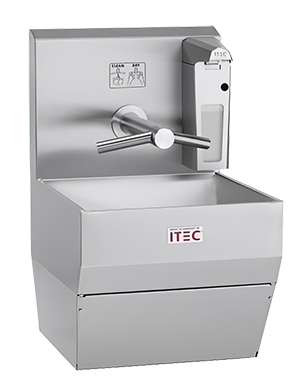
Shawpak are the exclusive distributor in North America for Hygiene Solutions with complete parts and service support.
Product Safety
Our experience in the product inspection industry is essential to the success of our quality assurance program, because we can enhance the safety of your products by detecting contaminants, for the removal, before those products reach your consumers.
Protection and Trust
Protecting your customers, shareholders and brand is your ultimate goal. Ensuring that you have the proper equipment to do the job is ours.
Technical Advisors
Shawpak Systems Technical Advisors will guide you through the best practice options available based on your specific application, acting as your Trusted Advisor.


X Ray Contamination Detectiona
X-ray contamination detection is an advanced inspection technology that uses controlled radiation to identify foreign objects, structural defects, and contamination within packaged products without opening or damaging them. Shawpak Systems Ltd, based in Oakville, Ontario, supplies and supports industrial inspection equipment that helps food processing, pharmaceutical, and manufacturing facilities across North America meet contamination control standards and protect consumer safety.
For facility managers and operations directors responsible for product quality, the choice of detection method directly affects production speed, accuracy, and regulatory compliance. Understanding how different approaches compare helps you select equipment that matches your facility's specific contamination risks, product types, and throughput requirements.
How X-ray Detection Compares to Alternative Inspection Methods
X-ray inspection systems detect a broader range of contaminants than conventional alternatives. Metal detectors identify ferrous and non-ferrous metals but miss glass, ceramics, stones, and bone fragments. Visual inspection catches only surface-level problems and becomes unreliable at production speeds above 100 units per minute. X-ray systems detect all of these at once, making them the standard choice in high-risk environments like meat processing and pharmaceutical manufacturing.
The trade-off is cost and throughput. X-ray equipment requires higher capital investment and generates lower inspection speeds than metal detection alone-typically 40 to 80 units per minute depending on product density and image complexity. Metal detectors run 3 to 4 times faster but address only one contamination type. In Oakville and across North America, many facilities use both technologies in sequence: metal detectors for speed and initial screening, X-ray systems for final verification on high-value or high-risk products.
Because X-ray systems require operator training, regular calibration, and regulatory oversight, they demand ongoing technical support. Shawpak Systems Ltd provides certified after-sales support, on-site training, and parts distribution across Canada and the USA, ensuring your inspection equipment stays compliant and maintains accuracy over time.
| Inspection Method | Contaminant Detection Range | Typical Throughput | Capital Cost | Best Use Case |
|---|---|---|---|---|
| Metal Detection | Ferrous and non-ferrous metals only | 200-400 units/min | Low | Initial screening, high-speed lines |
| X-ray Inspection | Metal, glass, stone, bone, density changes | 40-80 units/min | High | Final verification, mixed contaminant risk |
| Visual + Manual Inspection | Surface defects and visible foreign objects | 20-50 units/min | Low (labor-intensive) | Small batches, specialty products |
| Checkweigher Systems | Weight anomalies only | 100-300 units/min | Medium | Fill-level verification, density sorting |
Key Performance Differences in X-ray Contamination Detection Systems
Not all X-ray systems perform equally. The distinction lies in image resolution, sensitivity thresholds, and material compatibility. High-resolution systems detect foreign objects as small as 1.5 mm in density-optimized products; standard systems typically bottom out at 2.5 to 3 mm. For meat processing operations handling bone-in products or facilities inspecting pharmaceutical tablets, this difference translates to fewer missed contaminants and fewer false rejections.
Sensitivity tuning is critical. A system too sensitive rejects good product and stops your line; one too lenient allows contamination through. The best systems allow operators to adjust detection thresholds per product type without requiring recalibration. Shawpak Systems' Centre of Excellence demonstration facility lets you evaluate equipment performance on your actual products before purchase, reducing the risk of selecting undersized or oversized technology.
Radiation dose and safety compliance also vary between models. Newer systems use pulsed X-ray technology to reduce operator exposure while maintaining image quality. Older continuous-beam systems consume more energy and generate higher scatter radiation. If your facility in Oakville or elsewhere operates 24/7 or handles high-volume throughput, the cumulative radiation exposure difference becomes a significant health and liability consideration over equipment lifetime.
Facilities that combine X-ray inspection with certified operator training and preventive maintenance reduce contamination incidents by up to 95 percent and cut false-rejection waste by 30 to 50 percent, according to third-party validation studies in food processing.
Speed and integration matter as well. Inline X-ray systems connect directly to your production line, ejecting rejected products automatically. Offline or benchtop systems require manual handling and are suited only to low-speed or batch operations. For manufacturing plants and food processing facilities running continuous production, inline integration is not optional-it is the only practical choice.
Selecting the Right Approach for Your Facility's Needs
The decision framework begins with three questions: What contaminants do you need to detect? What is your target throughput? What is your budget for capital equipment and ongoing support?
If your facility processes bone-in meat, inspects filled pharmaceutical containers, or handles products prone to glass or ceramic breakage, X-ray inspection is justified even at lower throughput. If you run a single-product line at stable speeds and your primary concern is metal contamination, a quality metal detector may suffice with periodic manual spot checks. Most mid to large-scale operations benefit from layered detection: metal detection as the first gate, X-ray as the final verification step for higher-value or higher-risk products.
Budget allocation should account for total cost of ownership, not purchase price alone. X-ray systems require operator certification, spare parts inventory, regular service, and software updates. Facilities partnering with Shawpak Systems gain access to technical advisory services that help you plan for these ongoing costs upfront, avoiding budget surprises and production delays caused by equipment downtime.
Regulatory requirements differ by industry and product category. Meat processing operations face different contamination detection standards than pharmaceutical manufacturers or packaged food producers. Shawpak Systems' technical expertise in serving food processing facilities, manufacturing plants, and pharmaceutical companies across North America ensures that your chosen equipment meets applicable compliance expectations and inspection protocols specific to your sector.
If you operate a facility in Oakville, Toronto, across Ontario, or anywhere in North America and need guidance evaluating contamination detection systems, contact Shawpak Systems to discuss your operation's specific requirements. Our team can assess your product type, production speed, and contamination risk profile, then recommend equipment that balances safety, efficiency, and long-term value. We invite you to visit our Centre of Excellence demonstration facility or request a consultation with one of our technical advisors.
Frequently Asked Questions
What contaminants can X-ray detection find that metal detectors cannot?
X-ray systems detect glass, ceramics, stone, bone fragments, and density anomalies that metal detectors miss entirely. Metal detectors identify ferrous and non-ferrous metals only, making X-ray inspection essential for products at high risk of multiple contamination types.
Is X-ray inspection faster than metal detection?
No. Metal detection typically processes 200 to 400 units per minute, while X-ray systems handle 40 to 80 units per minute depending on product density and image complexity. Many facilities use both in sequence-metal detection for speed and X-ray for final verification on critical products.
How much does X-ray contamination detection equipment cost near Oakville?
Capital costs for inline X-ray systems range from moderate to high depending on throughput, image resolution, and integration requirements. Shawpak Systems provides equipment selection consultation and total cost of ownership planning to help you budget for both purchase and ongoing support.
What training do operators need to run X-ray inspection systems?
Operators require certification in radiation safety, equipment operation, and image interpretation. Shawpak Systems provides on-site training to ensure your team can detect contamination accurately, adjust sensitivity thresholds correctly, and maintain compliance with regulatory standards.
Can X-ray systems be added to an existing production line?
Yes, inline X-ray systems integrate with existing conveyor and packaging equipment, though installation requires assessment of line speed, product size, and spatial constraints. Shawpak Systems offers technical advisory services to determine feasibility and design integration for your specific facility.
How often do X-ray inspection systems need maintenance?
Inline X-ray systems require regular calibration, software updates, and preventive maintenance to maintain accuracy and safety compliance. Shawpak Systems distributes parts and provides certified after-sales support across Canada and the USA to keep your equipment operating reliably.
Which is better for my facility: X-ray inspection or a checkweigher?
X-ray systems detect foreign object contamination across multiple types; checkweighers detect only fill-level and weight variations. For contamination control, X-ray is superior. Checkweighers are best paired with X-ray inspection as a secondary control for fill accuracy rather than as a replacement for contamination detection.

Products to Suit Your Needs
- Hygiene Equipment
- Product Inspection
- Packaging Equipment
- Training and Demo Facility
- Sealing Equipment
- Custom Conveyors
- Consultant Service
- Direct Drive Technology
- Spare Parts
- Test Samples
Contact US
For general information or to set up an appointment please complete the form below or give us a call.
GENERAL INQUIRIES
Sales (905) 847 0122 EXT 1
Accounting (905) 847 0122 EXT 4