






Welcome To Shawpak Systems Ltd
Established in 1984 Shawpak Systems prides itself on providing high level technical sales and support to our valued customer base. Offering solutions for Product Inspection, Packaging and Hygiene equipment sales and after sales support including certified customer training on site or at our Centre of Excellence training and demonstration facility.
What Our Clients Are Saying
North American Distributor Hygiene Equipment Solutions
Shawpak are the exclusive distributor in North America for Hygiene Solutions with complete parts and service support.
Product Safety
Our experience in the product inspection industry is essential to the success of our quality assurance program, because we can enhance the safety of your products by detecting contaminants, for the removal, before those products reach your consumers.
Protection and Trust
Protecting your customers, shareholders and brand is your ultimate goal. Ensuring that you have the proper equipment to do the job is ours.
Technical Advisors
Shawpak Systems Technical Advisors will guide you through the best practice options available based on your specific application, acting as your Trusted Advisor.


Machine Vision Solutions
Machine vision solutions are automated imaging and analysis systems that inspect products, detect defects, and verify packaging quality in real time on production lines. Shawpak Systems Ltd, an industrial equipment distributor based in Oakville, Ontario, has integrated these technologies into hygiene and packaging workflows across North America since 1984, helping food processors, manufacturers, and pharmaceutical facilities meet compliance standards while eliminating costly rejects.
A meat processing facility operating near Oakville faced a recurring quality problem. Despite manual inspections at multiple checkpoints, contaminated or improperly sealed packages were reaching distribution centers, triggering customer complaints and regulatory audits. The facility's operations director knew the bottleneck was human oversight: inspectors working shift-long routines could not sustain the visual attention required for thousands of items per hour. Stopping production to retrain staff or add headcount was not economically viable.
The facility's challenge was not unique. Manufacturing and food processing plants across the region-from Oakville to suppliers serving broader North America-depend on shrink wrapping and packaging equipment that must perform without defect. When vision inspection was absent or manual-only, the cost structure became unfavorable: waste disposal, remediation, and reputational risk outweighed labor savings. The operations team needed a solution that would integrate seamlessly with existing equipment, deliver real-time feedback, and require minimal operator retraining.
Designing an Integrated Inspection System
Shawpak Systems approached the problem by treating vision inspection not as a standalone add-on but as a component of the facility's total packaging workflow. The company's technical advisory team conducted a site visit to map the production line, documenting line speed, package dimensions, material composition, and existing equipment interfaces. Because the facility's shrink wrapping machinery was a Shawpak-supplied system, integration points were already understood.
The implementation centered on three elements. First, high-resolution cameras were positioned at the shrink wrapping discharge point, capturing images of every sealed package before it entered the conveyor system. Second, image processing software was configured to detect five specific failure modes: incomplete seals, wrinkle formation, label misalignment, contamination on the film surface, and dimensional variance. Third, the system was connected to the wrapping equipment's control interface, allowing automatic rejection of non-compliant packages and real-time alerting to the operator console.
Shawpak's Centre of Excellence demonstration facility in Oakville played a critical role in proof-of-concept testing. Before full deployment, the facility's maintenance supervisor and line operators spent a day at the Centre observing identical equipment configurations and running trial packages through the vision system. They learned how to interpret alerts, adjust camera positioning, and troubleshoot common calibration issues. This hands-on preparation reduced deployment risk and accelerated operator confidence.
The company also provided on-site training during commissioning, ensuring the facility's maintenance team could handle routine camera cleaning, lighting adjustments, and software parameter tuning without external support. Because Shawpak delivers both the shrink wrapping equipment and the vision integration, support calls route to a single technical point of contact, eliminating coordination delays between separate vendors.
Measuring Impact and Operational Outcome
Within the first two weeks of operation, the system processed over 150,000 packages and flagged 847 items for rejection. Post-inspection analysis showed that 790 of those flagged items had genuine defects-incomplete seals, contamination, or misalignment-that would have reached customers or failed regulatory audit. The remaining 57 were false positives, mostly edge-case lighting reflections that operator feedback helped the software learn to ignore.
The measurable outcomes were significant. Scrap rates declined by 2.8 percent within the first month, translating to approximately 4,200 fewer packages per day entering waste streams. Customer complaint volume related to seal integrity dropped to zero. The facility avoided an estimated three regulatory non-conformance findings during the next audit cycle because documented visual inspection data now existed for 100 percent of production.
Labor utilization improved without staff reduction. The line operators previously spent 35 to 40 percent of their shift performing manual spot checks; that time was reallocated to equipment maintenance, line optimization, and secondary quality tasks. The operations director reported that operator engagement increased because the role shifted from repetitive visual scanning to problem-solving and equipment stewardship.
The facility also achieved secondary benefits. Because the vision system logs every inspection decision, the operations team could analyze trends in real time. A gradual increase in seal failures on Tuesdays and Wednesdays correlated with humidity changes in the production area; installing a dehumidifier in that zone eliminated the pattern. Before automated inspection, this pattern would have gone undetected because it was not severe enough to warrant manual investigation.
Implementation cost was recovered within 14 months through a combination of scrap reduction, avoided customer remediation, and labor reallocation. The facility's capital equipment budget was modest, and Shawpak's technical advisory process had helped prioritize the highest-return modification among several options under consideration.
This outcome reflects Shawpak Systems Ltd's approach across the region. Whether the challenge is hygiene compliance at a pharmaceutical facility, contamination detection in food processing, or packaging automation at any manufacturing operation in Oakville or beyond, the company treats vision integration as an extension of the equipment ecosystem it has already installed. Technical expertise rooted in 40 years of industrial distribution means recommendations are grounded in production realities, not theoretical specifications.
If your facility is experiencing quality escapes, manual inspection bottlenecks, or regulatory documentation gaps, Shawpak Systems can help you evaluate whether automated vision inspection is the right next step. The company offers no-obligation technical assessments and can arrange a visit to the Centre of Excellence so your operations team can see systems in action before any commitment. Contact Shawpak to discuss your specific production challenges and explore how integrated inspection can improve your operation's reliability and compliance posture.
Frequently Asked Questions
What defects can machine vision systems reliably detect on packaging lines?
Vision systems excel at detecting seal integrity (complete vs. incomplete), label alignment and positioning, surface contamination (particles, dust, liquid), wrinkle or fold formation, dimensional variance, and color or print defects. Detection accuracy depends on proper lighting, camera positioning, and software calibration-factors Shawpak Systems addresses during on-site setup and training.
Is there a machine vision solutions provider near Oakville who can integrate with existing shrink wrapping equipment?
Shawpak Systems Ltd, based in Oakville, specializes in integrating vision inspection into packaging lines, particularly those using shrink wrapping equipment the company has already supplied. Their technical team conducts site assessments, oversees integration, and provides on-site training. They serve food processing, pharmaceutical, and manufacturing facilities across North America.
How long does it take to implement a vision inspection system on a running production line?
Implementation typically takes 2 to 5 days depending on line complexity, existing equipment interfaces, and facility downtime windows. Shawpak Systems coordinates installation during scheduled maintenance or shift gaps. Pre-implementation testing at the Centre of Excellence can reduce on-site commissioning time and operator learning curve.


Products to Suit Your Needs
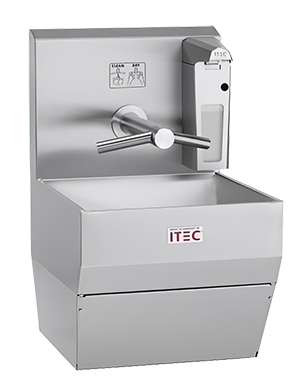
- Hygiene Equipment
- Product Inspection
- Packaging Equipment
- Training and Demo Facility
- Sealing Equipment
- Custom Conveyors
- Consultant Service
- Direct Drive Technology
- Spare Parts
- Test Samples
Contact US
For general information or to set up an appointment please complete the form below or give us a call.
GENERAL INQUIRIES
Sales (905) 847 0122 EXT 1
Accounting (905) 847 0122 EXT 4